Optometrists · BC · AB
The practice, the lanes and the dispensary — in one facility.
Optometry purchases are financed exactly as medical and dental purchases are: the same full-project structure, the same leverage, the same repayment terms. The retail side of the practice does not change that.
 Arranged by Ramin Hallaji, licensed mortgage broker — with the very best connections inside each of Canada’s major lenders.
 Optometry practice financing
The four pillars
What gets financed
The purchase is rarely one number. It is four, and they are underwritten together — which is why, most of the time, the down payment comes out at nothing.
Real estate
The premises where the practice trades, whether a street-front unit or a suite — where you are buying rather than leasing it.
Usually 25 yearsPractice acquisition
The practice itself: the patient base, the recall list, the goodwill and the going concern.
About 12 yearsLeasehold & equipment
Exam lanes, phoropters, OCT and retinal imaging, visual fields, edging lab and the dispensary fit-out.
About 12 yearsWorking capital
A revolving corporate line of credit — not a term loan — covering frame and lens inventory, payroll, and the float through the handover from the retiring optometrist.
Revolving lineThe shape of the deal
Two clocks, one project — and usually no down payment
For licensed healthcare professionals this category commonly reaches full-project financing — commonly, not always. Some lenders will go to 100% against the building and still want a contribution against the goodwill and the leaseholds; most of the time the down payment lands at nothing. The building on an amortisation of twenty-five years in most cases — occasionally thirty — with the practice, equipment and build-out written over about twelve. The expensive, faster-amortising piece clears first, so the heaviest year of the loan is the first one, not the tenth.
A year or two of interest-only is usually available while the appointment book fills — and the facility is commonly fully open, so any part of it, the mortgage included, can be cleared early without penalty.
These deals are commonly held across two companies — a holding company for the real estate, an operating company for the practice, with guarantees crossing between them. Have your accountant in the room early; that structure has tax consequences well beyond the loan.
The shape of the deal
- Down payment
- Commonly none
- Real estate
- Usually 25 years, sometimes 30
- Practice, equipment, build-out
- Written over about 12 years
- Opening period
- 1–2 years interest-only
- Prepayment
- Fully open, no penalty
The terms this category commonly reaches, not a quote — and “commonly” is doing real work. Some lenders will finance 100% of the building and still ask for a contribution against the goodwill and the leaseholds. What lands on your own file is confirmed to you in writing before you are asked to commit to anything.
Affordability
Practice-acquisition estimator
Set the practice’s cash flow and your own assumptions; the estimator shows the borrowing the cash flow could support. It quotes nobody’s pricing — the rate is your input.
Arithmetic on figures you supplied — not an approval, a pre-approval, or an offer. Real estate in a project runs on its own longer clock and can carry further than this single-term illustration.
They arrive in the message box, editable — straight answer inside one business day.
Optometry specifics
The clinical practice and the retail floor, financed together
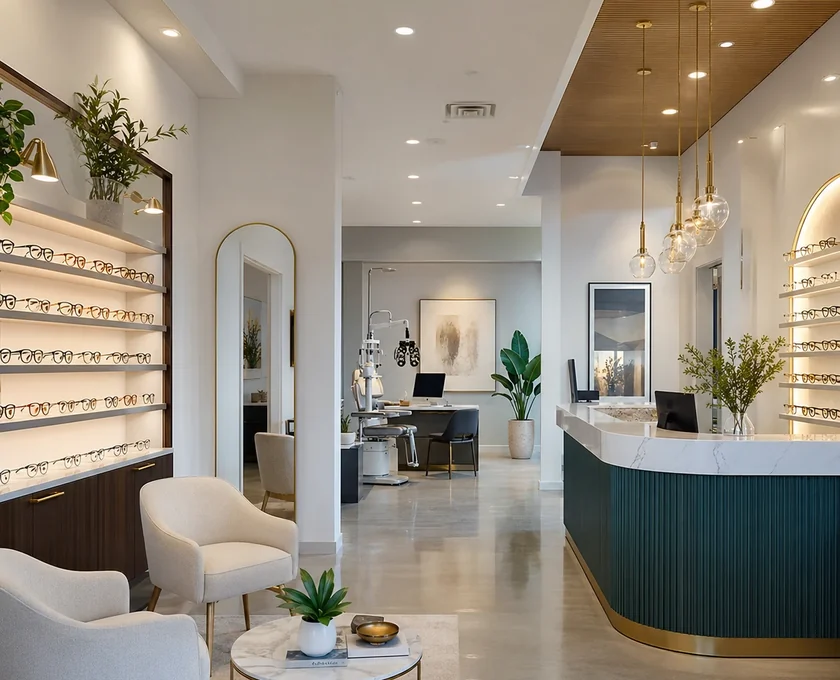
An optometry practice is two businesses sharing a door. The clinical side runs on appointments, equipment and your licence. The dispensary runs on inventory, display and margin. They are bought as one thing, and they should be financed as one thing.
That matters most in the equipment and build-out piece, which in optometry is unusually broad: exam lanes and their instruments, imaging, an edging lab if you cut your own lenses, and then the dispensary fit-out — cabinetry, display and lighting that look like retail spend but are structurally part of the practice you are buying.
Frame inventory deserves its own mention. It is real, sellable stock, and it sits in the working-capital piece rather than being something you fund out of pocket on top of the purchase — exactly the item that trips up a buyer who budgeted only for the practice price.
Cold starts: no goodwill to buy makes the project smaller, but build-out and working capital carry proportionally more of it — and the file is judged on your projections and catchment. Bring a location analysis to the first conversation and it will move faster.
We work alongside your healthcare practice broker, your accountant and your financial adviser — the financing is built around the deal they helped you shape, not the other way round.
Questions
The ones that come up first
Yes. Optometry practices work exactly as medical and dental practices do — the same full-project financing, structure and amortisations, with the same caveat that applies to all of them: it is commonly full-project, not always, and a lender may want a contribution against the goodwill and leaseholds. There is no separate, harder category for optometrists.
No. A first practice purchase is judged on the practice you are buying rather than on a personal earnings history you have not had time to build. What matters is the practice’s cash flow, the price, and your licence.
No. The retail component is part of the practice you are buying and is underwritten with it. Frame and lens inventory sits inside the working-capital piece rather than being a cost you carry separately.
Then the real estate piece simply is not in your deal, and the project is the practice and equipment on the shorter term, with working capital as a revolving line. Most optometry practices lease. If you buy the premises later, it can be added.
Get started
Bring the deal you are actually looking at
A purchase agreement, a set of practice financials, or a location you are considering for a cold start. Early is better — the structure is easiest to influence before anything is signed.